

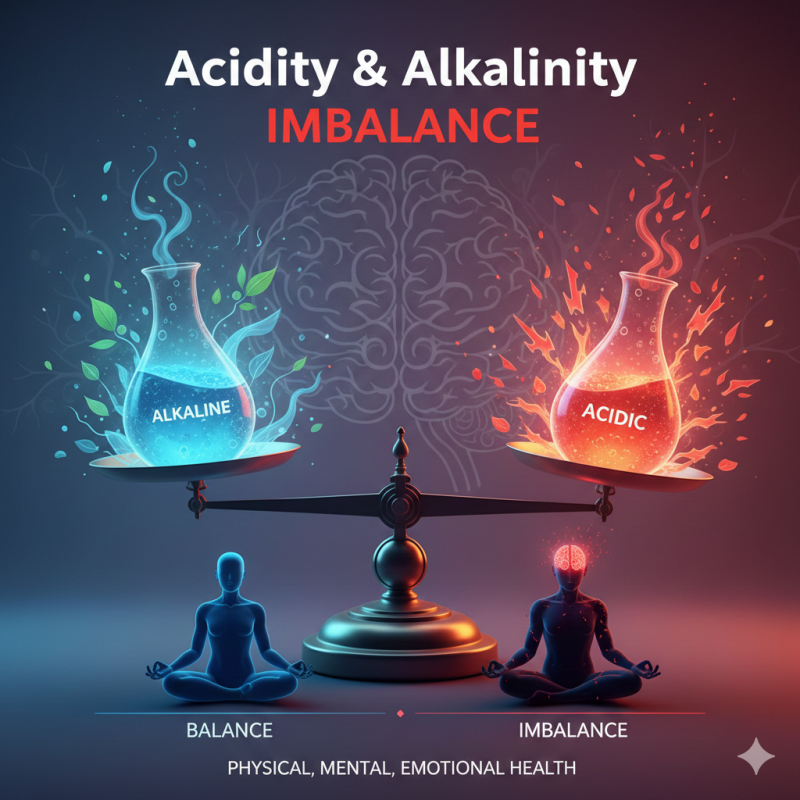
Acidity and alkalinity are not wellness trends — they are core physiological processes the body uses to function, adapt, and survive. Every system in the body operates within a specific pH range, and balance is maintained through the lungs, kidneys, minerals, and nervous system.
When this balance is disrupted for extended periods, the effects are not limited to the physical body. Mental clarity, emotional regulation, and stress tolerance are also influenced.
Understanding how imbalance presents allows the focus to shift away from extremes and toward regulation.
How the Body Manages pH
The body maintains blood pH within a narrow range of approximately 7.35–7.45. This range is tightly controlled, and significant shifts outside of it are considered medical conditions—not lifestyle states.
Different Areas of the Body Require Different pH Levels
🫁 The stomach is highly acidic
to break down food and destroy pathogens
💧 The blood remains slightly alkaline
to support cellular function
🧴 The skin is mildly acidic
to protect the barrier and microbiome
✨ Urine and saliva fluctuate daily
and reflect short-term changes, not overall health
Diet alone does not override these systems. However, long-term patterns can influence mineral balance, inflammation, digestion, and stress response — all of which affect how efficiently the body maintains equilibrium.
When the Body Remains in an Acid-Dominant State Too Long
Acidity itself is not harmful. It is a natural byproduct of metabolism, digestion, physical exertion, and stress. Problems arise when buffering systems are consistently strained.
Physical Effects
- Increased inflammatory activity
- Greater mineral demand, particularly calcium and magnesium
- Muscle fatigue or slower recovery
- Increased protein breakdown in muscle tissue
- Reduced efficiency in tissue repair
Mental Effects
- Mental fatigue
- Difficulty sustaining focus
- Reduced cognitive efficiency under stress
- A sense of being mentally overstimulated yet unfocused
Emotional Effects
- Irritability
- Heightened reactivity
- Anxiety or restlessness
- Difficulty returning to a calm state after stress
When the Body Shifts Too Far Toward Alkalinity
While less common, excessive alkalinity can also create imbalance.
Physical Effects
- Reduced availability of free calcium in the bloodstream
- Digestive inefficiency, particularly in protein breakdown
- Bloating or nutrient malabsorption associated with low stomach acid
- Electrolyte imbalances affecting potassium and calcium
Mental Effects
- Slower mental processing
- Brain fog
- Reduced alertness
Emotional Effects
- Emotional flatness
- Detachment
- Reduced motivation
- A sense of disconnection rather than calm
The Nervous System Connection
Acid–base regulation is closely tied to autonomic nervous system activity.
- Stress responses increase acid-producing metabolic processes
- Restorative states support buffering, repair, and mineral retention
When the nervous system loses flexibility, balance becomes more difficult to maintain.
What Balance Actually Looks Like
Balanced internal chemistry is not defined by constant stillness or constant energy — it is defined by adaptability.
- Clear thinking without overstimulation
- Emotional responsiveness without overwhelm
- Efficient digestion
- Stable energy throughout the day
- Recovery after stress
What Is Often Misunderstood
The body tightly regulates blood pH, and diet alone does not significantly alter it in healthy individuals.
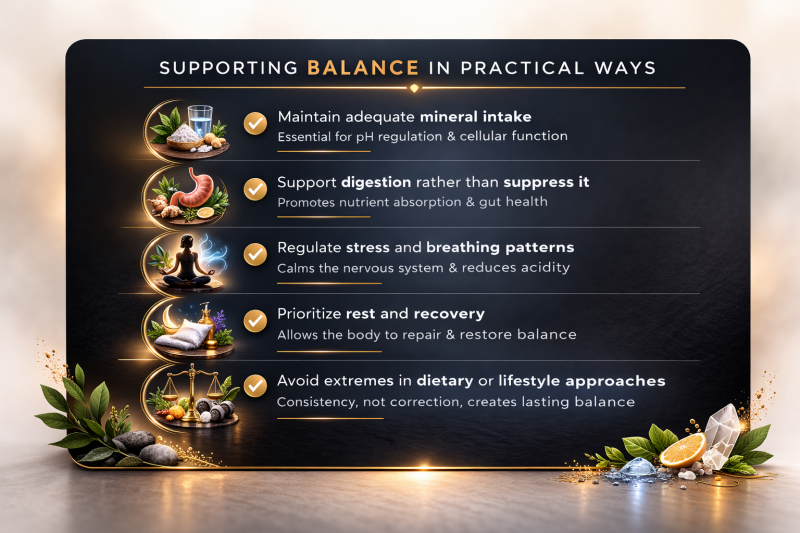
Improvements often come from:
- Increased mineral intake
- Reduced processed foods
- Improved digestion
- Lower inflammatory burden
- Reduced metabolic stress
Health shifts happen when multiple systems are supported at once.
Closing Perspective
Acidity and alkalinity are cooperative processes—not opposing forces.
Health is not achieved by forcing a state, but by restoring the body’s ability to regulate itself.
Sources & References
- National Institutes of Health (NIH) — Acid-Base Balance
https://www.ncbi.nlm.nih.gov/books/NBK507807/ - Kraut JA, Madias NE. Metabolic Acidosis. New England Journal of Medicine
- Frassetto L et al. Dietary Acid Load and Health. American Journal of Clinical Nutrition
- Harvard T.H. Chan School of Public Health — The Alkaline Diet
- Guyton & Hall. Textbook of Medical Physiology
- McEwen B. Stress, Adaptation, and Disease
- Cleveland Clinic — Acidosis and Alkalosis Overview
Add comment
Comments